
 UK
UK
 Ireland
Scottish aggregates tax: Not so simple
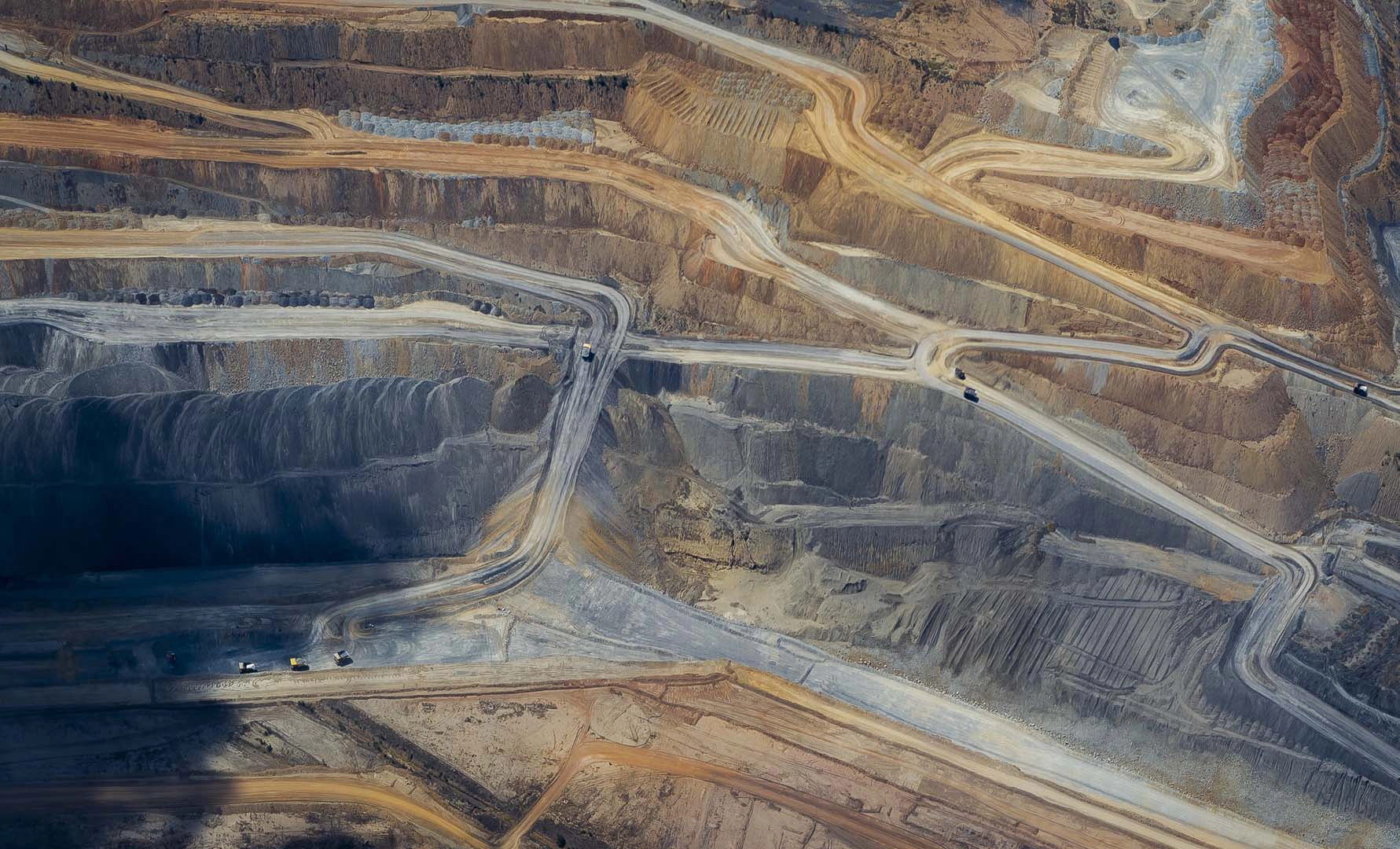

Businesses need to look carefully at the new Scottish tax replacing the aggregates levy. It’s not always easy to know where it might bite.
In summary
The Scottish aggregates tax (SAT) came into force in April 2026, replacing the UK-wide aggregates levy in Scotland
It requires those responsible for commercially exploiting taxable aggregates to register with Revenue Scotland, file returns quarterly and account for any SAT liability
There are various forms of commercial exploitation, but a quantity of aggregate should only be taxed once. Therefore, determining who is liable and when won’t be easy in complex supply chains with various parties undertaking different activities
This determination is crucial to enable businesses to understand their obligations, obtain appropriate contractual protection where necessary, and avoid potential penalties for missed registrations or unpaid tax
The UK aggregates levy, designed to encourage the use of recycled aggregates by taxing the commercial exploitation of rock, sand and gravel, was announced at the turn of the millennium and introduced by the Finance Act 2001. Now, 25 years later, it has been replaced north of the border by the Scottish aggregates tax (SAT). It came into force in April.
In broad terms, it’s no great change. The SAT also targets aggregate that is commercially exploited and, at £2.16 a tonne, it matches the current rate under the levy in England, Wales and Northern Ireland.
But not everything familiar is simple, and it’s important to understand how the SAT operates in practice. Otherwise, businesses can quickly come undone.
Does Scottish aggregates tax liability arise?
There are two key elements to establishing if an SAT liability exists:
Whether the material in question is in-scope “aggregate”; and
If so, whether the aggregate is taxable – ie not exempt and also subjected to commercial exploitation
The answer to the first is often straightforward to answer. Gravel, sand and rock are in scope, as well as substances incorporated or naturally mixed with them.
Examples of exempt aggregate include coal, lignite and slate; aggregate that has already been subject to SAT (and not later relieved); recycled aggregate that has already been used in construction; and aggregate that has been extracted as a necessary part of construction work.
The aggregate must also be subject to “commercial exploitation” for a liability to arise. The Act specifies four forms:
Removal of the aggregate from its “originating site”, such as a quarry
Subject to an agreement to supply the aggregate to another person
The use of aggregate for construction
Mixing aggregate with another material or substance except water (to make cement or concrete, for example) other than in “permitted circumstances” (where it’s mixed at a qualifying site, with taxable aggregate that has not previously been subjected to commercial exploitation in Scotland).
There are certain specific exclusions, too, such as the removal of aggregate to a registered site for the purpose of having an excepted process applied to it on that site.
Who is taxable under the SAT – and when?
Crucially, one category of exempt aggregate is that on which SAT has already been paid (and not later relieved): Taxable aggregate should only attract a charge once. However, more than one person can be liable, in which case their liabilities may be joint and several.
To illustrate how this might work in practice, take the example of a quarry operator agreeing to supply aggregate, aggregate that is removed from a quarry, mixed with another substance, then used in construction activity. In that instance, there could be multiple different forms of commercial exploitation by various different parties, but only one party should register and account for the SAT.
Examine the detail, and it quickly becomes clear that in a complex supply chain identifying who is liable for the tax and when, and who should register and pay for the tax, may not be easy, but it should be considered at the outset of any new project: The legislation requires a person responsible for subjecting the aggregate to commercial exploitation, or forming an intention to do so, to register with Revenue Scotland within 30 days.
In practice, we would expect that the person who first commercially exploits the taxable aggregate registers and pays.
When registering, a person will select their accounting period, which is a quarterly period with accounting periods ending on either:
30 June, 30 September, 31 December, 31 March, or
31 May, 31 August, 30 November, 28 (or 29) February, or
30 April, 31 July, 31 October, 31 January
Any aggregate exploited during each period must be reported no later than 30 days after the end of the accounting period. Failure to register, meanwhile, can result in penalties, and those supplied aggregate by unregistered operators can be held jointly and severally liable for the unpaid SAT.
Examine the detail, and it quickly becomes clear that in a complex supply chain identifying who is liable for the tax and when may not be easy.
A case in complexity
A recent case we worked on illustrated some of these complexities: A contractor requiring a significant amount of aggregate for a project entered into an agreement with a quarry operator.
The initial contract, however, was only to blast the aggregate, prepare it and store it. There was no mention of removal. To complicate matters further, the contractor leased the quarry from its owner and subcontracted a quarry operator for the work.
SAT will apply to the aggregate, but the initial contract was solely for the commencement of quarry operations and storing of aggregate on site. Consequently, there was no commercial exploitation at that point, and no SAT liability arose.
Only when the second contract for the sale is signed does the SAT liability and the taxing point arise. Had it not arisen at this point for any reason, though, our client, the contractor, would have been the first person to commercially exploit the aggregate, by using it in construction.
Identifying the earliest commercial exploitation is vital, because it helps to determines when the liability arises and who pays the tax. Given the potential for liability for unpaid tax by an unregistered operator, there’s also a strong case for explicitly allocating responsibility for SAT in relevant contracts. With the potential for so much complexity, it’s wise to reduce scope for uncertainty.
After all, you don’t want to find yourself left carrying the weight of an unexpected tax liability, however many tonnes it is.
Talk to us today
Experts on tax, both sides of the border
Our professionals work with businesses across Scotland, the UK and internationally, with expert advice and services across tax, audit and assurance, outsourcing and advisory.
By necessity, this briefing can only provide a short overview and it is essential to seek professional advice before applying the contents of this article. This briefing does not constitute advice nor a recommendation relating to the acquisition or disposal of investments. No responsibility can be taken for any loss arising from action taken or refrained from on the basis of this publication. Details correct at time of writing.
Approval code: NTEH7082651