
 UK
 Ireland
Stannah: Building a bomb-proof brand
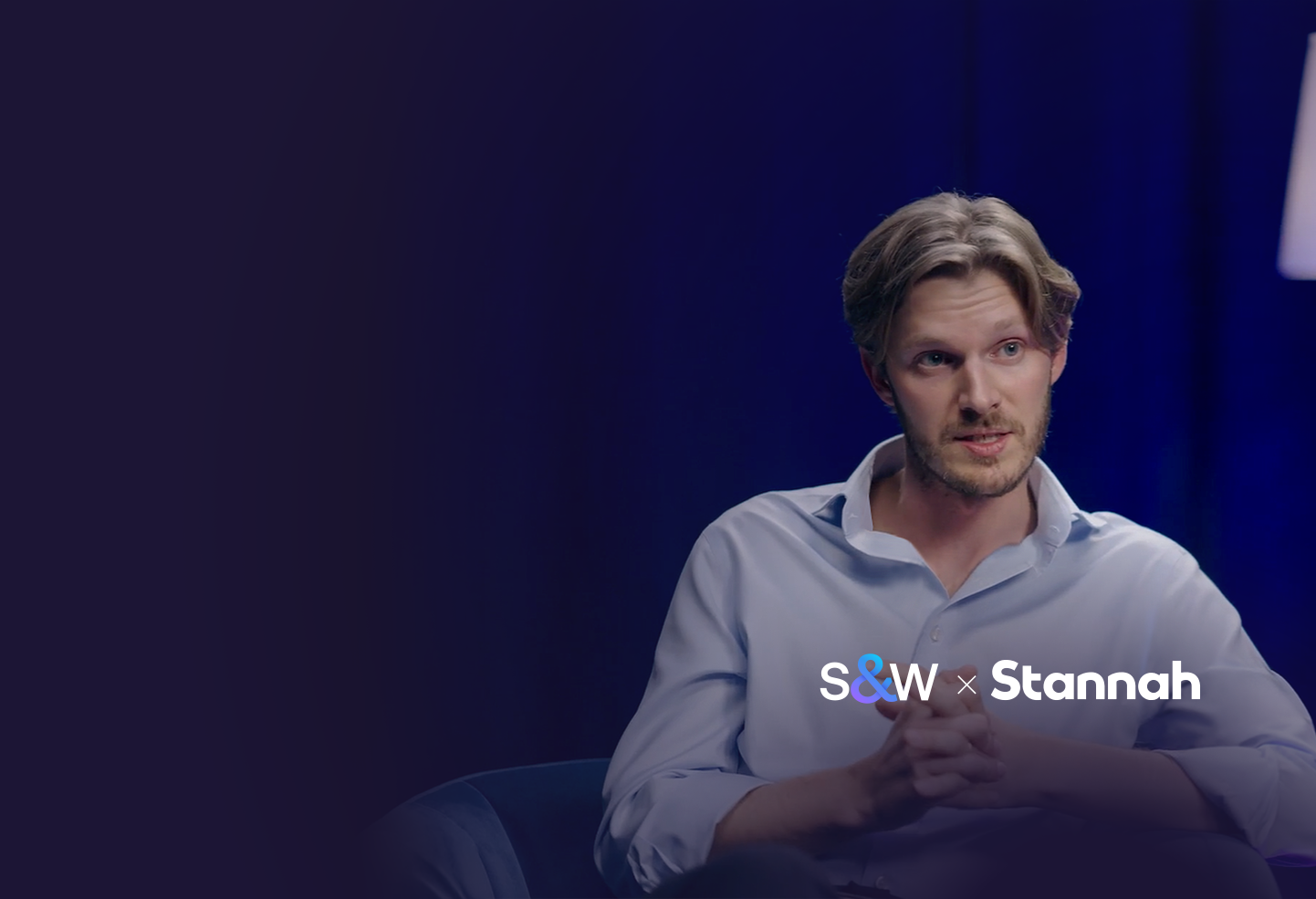

Sam Stannah talks about building a start-up within, bringing a CEO into a family-run business, and why the stairlift leader’s greatest asset remains its brand. Read the edited interview from the latest in S&W’s Behind the Growth series or watch the whole episode.
Watch Behind the growth episode five
Sam Stannah of Stannah Group
Six generations, an evolving brand and the secret to maintaining trust.
Walk me through the company's history, because it's a lot more than just stairlifts.
Stairlifts are relatively new in our history. They were launched in 1975, but the company dates back to 1867. It was a London-based business, which evolved at the beginning of the passenger lift market in the UK. The most dramatic part of the history was in World War Two, when our premises on Newport Street were bombed, and essentially the business was a pile of rubble, but even then the brand was strong enough to persevere.
My great-grandfather picked it up and, through sheer will, developed it back into a small elevator manufacturing company. My grandfather then joined with his brother, selling and manufacturing passenger lifts and home lifts, kind of similar to Uplift. We like to say that we were a home lift business before a stairlift business.
When people hear Stannah, they think stairlifts, but we do a huge amount more. We own distribution businesses in European countries and the US, have a business in China, and we have 100,000 lift products in the UK under service contracts, the biggest being every train station in the UK. Every station elevator and escalator in the UK is serviced by our fantastic teams.
And Uplifts sits within the brand as a lift that people can have within their homes?
We tried to make a home elevator in the past from within the Stannah stairlifts business, but that business is totally geared towards stairlifts, so it's incredibly difficult to get people to focus on quite a different, new product.
I created Uplifts as a start-up within because it needed that focus. When you're thinking about limited resources and what you should prioritise, it's very difficult when you're still seeing growth in your main product category to gear your teams towards building a whole new business, so we had to do it with total focus outside the group. It's a completely new team, new employees, new factory, new offices and, to create that identity, a new brand. When I started it, it was just me and a colleague in a room saying, "Maybe it is time to do something different."
It's very difficult when you're still seeing growth in your main product category to gear your teams towards building a whole new business
But now you’re moving from inception to integration?
Yes, Uplifts is now around 85 people, so it's scaled quite considerably. It will be quite a challenge to integrate, but it is clearly the right thing to do. The start-up within strategy was desperately needed to create that focus, but once it gets to a certain scale, it’s a no-brainer to bring it back into the group. It’s great to get something off the ground, but ultimately my responsibility as a member of the family is to build Stannah. Uplifts is built now, so it's time to bring it into Stannah so it doesn't grow despite it, but within it.
You have a new CEO. After six generations of the family running the business, how easy was it to trust someone else coming in?
So, Marco Luna was our chief commercial officer, and he's now CEO of home accessibility, while Archie Hungwe is the CEO of the lift, distribution and service business. We're really pleased we made the change. We can immediately see the benefits of being able to drive our strategy through two very capable leaders.
One of the first things in our constitution is that we stay a family-owned business, so we are not going to sell or bring in outside investors. We used outside support to help define governance models, and the executive board, which is our new term for the more involved family members, meets twice a week. We are very involved with the business. We want to know everything, see what's happening, and make sure our CEOs are supported.
What is probably a little bit more difficult is how to also step back and make sure we give them autonomy, because this whole governance model falls apart if the family, having stepped out of CEO roles, are then micromanaging the person who comes in.
This whole governance model falls apart if the family, having stepped out of CEO roles, are then micromanaging the person who comes in.
You are a very trusted brand. How do you still maintain that trust as time passes?
We always say our brand is our most valuable asset. It’s not the factories, the machinery or our patents. It's our brand.
The way that we've perpetuated that is through the values on which the business is run, and they come straight from the family. My great, great, great grandfather, when he set up the business 159 years ago, had his ten rules of life. They're about how you treat people, how you learn from everybody you meet, how you work hard, wake up early and get on with your day.
As a family through the generations, we’ve tried to preserve that, and we ask our business leaders to spread that through our employees. That drives what customers see.
We're a very service-driven company. We like to say that we sell through service, so we think of that as our growth strategy. It might not be as quick as some of our competitors who sell very aggressively, but as a family we don't believe that's the right way to build a sustainable business.
The hardest thing to protect as you grow is your culture.
Hear more from inspiring business leaders
Watch the full Behind the growth series
Founders and business leaders explore the decisions, challenges and turning points behind business growth.